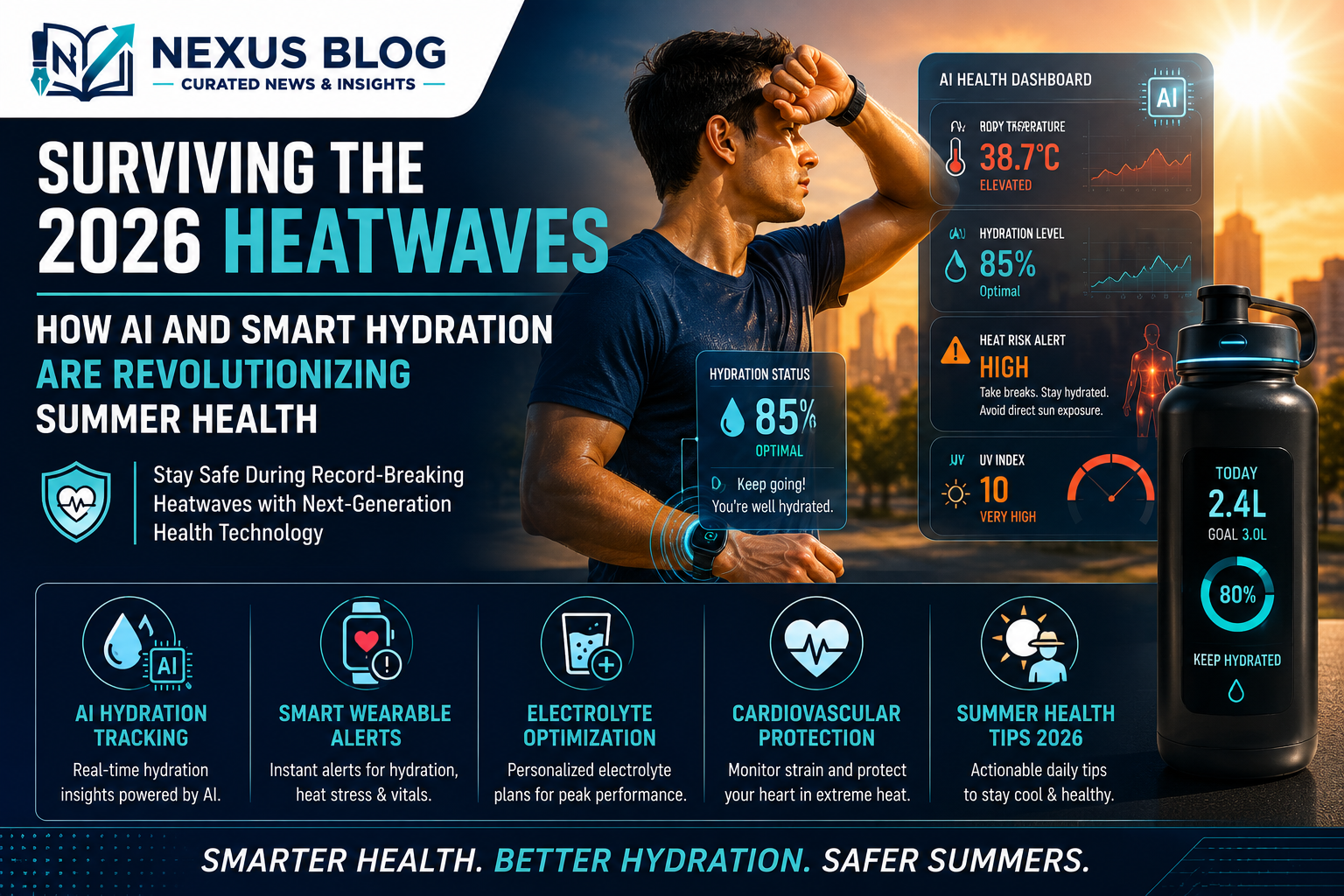
Proper hydration is one of the most overlooked components of physical performance and overall recovery. Even a minor 2% drop in total body water can lead to significant declines in muscle endurance, mental focus, power output, and temperature regulation during intense physical activity.
Traditional hydration guidelines—such as drinking a generic eight glasses of water per day—fail to account for individual sweat rates, sodium losses, humidity, and exercise intensity. Today, Artificial Intelligence is revolutionizing fluid management by creating highly dynamic, individualized hydration and electrolyte protocols.
1. Predictive Sweat Rate Modeling
Every individual sweats differently based on genetics, heat acclimation, body composition, and exercise intensity. Modern AI-driven fitness applications utilize wearable ambient temperature and skin humidity sensors to calculate real-time fluid losses.
By correlating your heart rate data with environmental factors like heat index and humidity, the AI estimates your exact fluid loss per hour. It then sends precise, timed intake reminders rather than leaving hydration to post-workout guesswork.
2. Precision Sodium and Electrolyte Balance
Replacing lost fluids with plain water during heavy, prolonged sweat sessions can dilute blood sodium concentrations, leading to cellular swelling, severe muscle cramping, and decreased athletic performance. Electrolyte balance—specifically sodium, potassium, and magnesium—is essential for cellular nerve signaling.
Advanced fitness algorithms process individual sweat salinity profiles combined with workout duration to prescribe precise electrolyte-to-water ratios. This ensures optimal muscle contractions and prevents painful cramping during high-volume strength or endurance workouts.
3. Temperature Regulation and Core Cooling Tactics
During high-intensity training sessions in warm environments, core body temperature rises rapidly. The human body cools itself primarily through sweat evaporation. However, when hydration is insufficient, cardiac strain increases as the heart works harder to pump blood to the skin surface for cooling.
AI models continuously monitor skin temperature changes and exertion levels to suggest core-cooling hydration strategies, such as specific fluid temperatures or pre-workout ice slushies, maximizing cardiovascular efficiency under heavy thermal stress.
4. Daily Biofeedback Integration for Recovery
Hydration needs do not end when your workout finishes. Post-workout fluid replacement dictates how quickly glycogen stores are replenished and how efficiently cellular waste is removed from stressed muscle tissue.
Machine learning platforms track your daily weight fluctuations, urine color logs, and sleeping heart rate variability (HRV) to assess overnight rehydration status, adjusting your baseline fluid requirements for the following day before you even step into the gym.
Conclusion: Hydration is not a one-size-fits-all metric. By replacing generic water intake rules with predictive AI fluid algorithms, athletes and fitness enthusiasts can maintain optimal cell hydration, improve stamina, and unlock consistent peak performance.



0 تعليقات